
Complete Guide to Anxiety Disorder Test: Tools, Benefits, and Next Steps
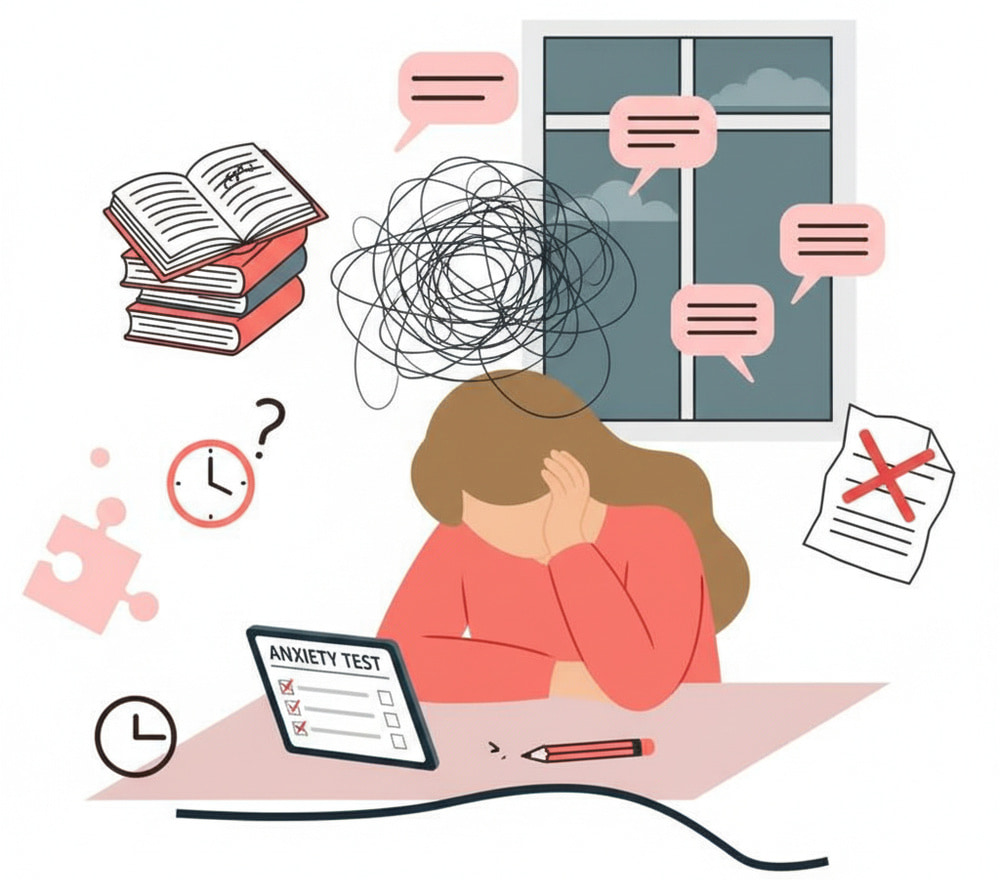
Take Anxiety Test Online
Get StartedUnderstanding Anxiety Screening and Self-Assessment
Modern mental health care uses brief, evidence-based screeners to flag patterns of worry, restlessness, muscle tension, and avoidance that persist and interfere with daily life. These questionnaires do not replace a clinical evaluation, but they help illuminate symptom severity, common triggers, and how often difficulties arise in work, school, or relationships. When a person starts exploring their experiences, a structured checklist can provide a shared language for discussing concerns with a professional and for tracking change over time.
In many primary care settings, clinicians begin with short measures to establish a baseline and decide whether a referral is needed to counseling or psychiatry. That first pass often includes an anxiety disorder test to quickly spotlight symptom clusters that align with recognized diagnostic criteria. By translating subjective feelings into quantifiable scores, the process makes it easier to notice trends and to identify which situations most aggravate distress.
Screeners are also useful for differentiating diffuse, free-floating worry from fear tied to specific situations. For instance, practitioners may complement general tools with a generalized anxiety disorder test when ongoing apprehension, irritability, and sleep disruption arise on most days for several months. With consistent use, these measures help people reflect on coping strategies, lifestyle contributors, and the early warning signs that predict a flare-up.
Benefits and Limitations of Online and Clinical Tools
Short questionnaires serve several important purposes in both digital platforms and clinics. They can reduce stigma by normalizing measurement, accelerate access to care by standardizing language, and guide personalized recommendations. Many are free, quick to complete, and widely translated, which helps diverse communities begin constructive conversations about mental health. Still, scores should be interpreted alongside context like medical history, medications, trauma exposure, substance use, and cultural norms.
When a provider needs a higher-resolution snapshot of persistent and excessive worry, they may deploy a generalized anxiety disorder diagnostic test that aligns with DSM-based criteria. Under the hood, these instruments leverage psychometrics such as internal consistency, factor structure, sensitivity, and specificity to minimize false positives while remaining simple enough to use during routine visits.
People sometimes wonder whether one tool can capture every presentation across the anxiety spectrum, yet measurement science favors targeted instruments for different subtypes. For broad triage, a clinician might start with an anxiety disorders test to establish whether anxiety likely requires further assessment. After that, additional tools can refine the picture, covering panic, phobias, health worries, or trauma-related hyperarousal as indicated.
Comparing Common Anxiety Screening Instruments
Because anxiety manifests in varied ways, no single instrument fits every situation. Some measures track free-floating worry and physical tension, while others emphasize avoidance and fear in social settings or crowded places. Tools also differ in length, scoring, and recommended cutoffs, and the best choice depends on the question being asked: broad triage, subtype screening, or progress monitoring.
| Tool | Primary focus | Items | Time | Typical setting |
| GAD-7 | Worry, tension, irritability | 7 | 2–3 min | Primary care, telehealth |
| BAI | Somatic anxiety symptoms | 21 | 5–10 min | Outpatient clinics |
| Mini-SPIN | Social fear and avoidance | 3 | 1 min | Screening events |
| LSAS-SR | Social performance and fear | 24 | 10–15 min | Specialty practices |
| SCARED | Pediatric anxiety domains | 41 | 10–15 min | Pediatrics, schools |
For individuals and clinicians tracking steady, near-daily worry, a focused tool can provide clearer signal than a broad intake form. In these cases, many teams rely on a brief generalized anxiety disorder screening test that is validated for repeated use across weeks to gauge response to therapy or medication.
Families and pediatricians often need instruments tailored to developmental stages, including caregiver-report versions that capture school avoidance, separation concerns, and peer-related stress. In that context, a practitioner might choose a child social anxiety disorder test to better understand classroom participation, friendships, and extracurricular engagement.
How to Interpret Scores and Take Next Steps
Scores offer a snapshot, not a label, so interpretation should be cautious and collaborative. Cutoffs indicate likelihood rather than certainty and are best understood alongside functional impairment, values, and available supports. If scores suggest elevated symptoms, a stepwise plan may include education, self-guided strategies, brief therapy, or a medication consult, depending on severity and preference.
People often want clarity before booking a visit, and a thoughtfully designed screener can reduce uncertainty by organizing subjective experiences into patterns. In that spirit, a common question prompting online tools is the phrase do i have anxiety disorder test, which reflects a desire for direction without the pressure of self-diagnosis. Using results as a conversation starter can make the first appointment more efficient and less intimidating.
When persistent, diffuse worry is the primary concern, clinicians typically gather history, assess impairment, and review medical contributors. Alongside those steps, providers may also test generalized anxiety disorder with structured questions to confirm whether symptoms are pervasive and long-standing. From there, the plan can expand to include cognitive behavioral therapy, lifestyle adjustments, and, when appropriate, pharmacologic options.
Addressing Social Context, Triggers, and Functioning
Anxiety rarely exists in a vacuum, so it helps to explore settings, relationships, and routines that amplify stress. Performance reviews, public speaking, dating, and crowded spaces can all provoke symptoms, as can perfectionism or fear of negative evaluation. Mapping these situations clarifies goals for therapy and suggests exposure-based exercises that build tolerance and confidence.
Because fear of scrutiny can be especially disabling, some people benefit from tools that hone in on interpersonal and performance scenarios. In those cases, a clinician may recommend a social anxiety disorder test to quantify how avoidance and distress shift across conversations, meetings, or presentations. With that profile in mind, treatment can target the most constraining situations first, using graded steps to restore functioning.
Actionable planning works best when measurement guides behavioral experiments, scheduling, and coping practice. To focus on gatherings, teams sometimes test social anxiety disorder with short scales that differentiate fear in small groups from fear on stage. The resulting insights make it easier to select exposures that feel challenging but achievable.
Preparing for a Professional Appointment
Arriving with organized notes accelerates meaningful care. Before a visit, jot down when symptoms started, how they wax and wane, and what helps or hurts. Bring a list of medications, supplements, sleep patterns, major stressors, and family history, and think about what success would look like in three months and six months. Clinicians appreciate concrete examples that reveal context and impact.
Primary care clinicians sometimes perform initial screening to decide whether to refer or to begin brief, evidence-based interventions. In that appointment, a provider may administer a general anxiety disorder test to estimate severity and to decide whether therapy, self-guided tools, or medication is the best first step. Sharing prior scores can help avoid duplication and streamline the plan.
Clear goals improve follow-through, so ask how progress will be measured and how often you should check in. Depending on symptoms and preferences, a clinician could also test anxiety disorder alongside depression screening to catch common overlaps that influence care. With a shared roadmap, small adjustments compound into steady improvement.
Practical Benefits at a Glance
Beyond identifying who might benefit from more support, structured screening catalyzes informed, collaborative decisions. Consistent measurement lowers guesswork, makes improvement visible, and signals when to adjust course. For people on waitlists, brief tools can function as a bridge, providing a framework for self-care while services are arranged.
- Faster triage and referrals when symptoms are elevated
- Clearer communication between patients, families, and clinicians
- Goal setting and progress tracking across weeks and months
- Better matching of interventions to symptom patterns
- Early detection that can prevent escalation and crises
When combined with education and supportive routines like sleep hygiene, exercise, and values-based scheduling, screening offers a practical path from confusion to clarity. Thoughtful use of tools, rather than overreliance on any single score, keeps care personal and effective.
FAQ: Anxiety Screening and Assessment
Are online screeners accurate enough to trust?
Many brief measures are well validated and correlate strongly with clinician-rated scales. They are reliable first steps, and their results become most useful when discussed with a professional who can add context, rule out medical causes, and tailor next steps.
What should I do if my score looks high?
Consider contacting your primary care clinician or a licensed therapist to review results and your history. If you feel unsafe or unable to function, seek urgent support immediately through local emergency services or crisis lines in your region.
How often should I retake a screener?
For monitoring, many people repeat a brief measure every one to two weeks, especially after starting therapy strategies or medication. Regular intervals help reveal trends that day-to-day feelings can obscure.
Can physical health conditions mimic anxiety symptoms?
Yes, thyroid issues, heart rhythm changes, medication effects, and sleep disorders can all produce sensations that resemble anxiety. A medical checkup can clarify whether symptoms have physiological contributors that need attention.
Do children and teens use different tools than adults?
Pediatric measures include age-appropriate language and often have both self-report and caregiver-report versions. These instruments capture school-related stressors, peer interactions, and developmental milestones that influence anxiety.